

How To Draw Out A Deep Blackhead On Cheek
Overview
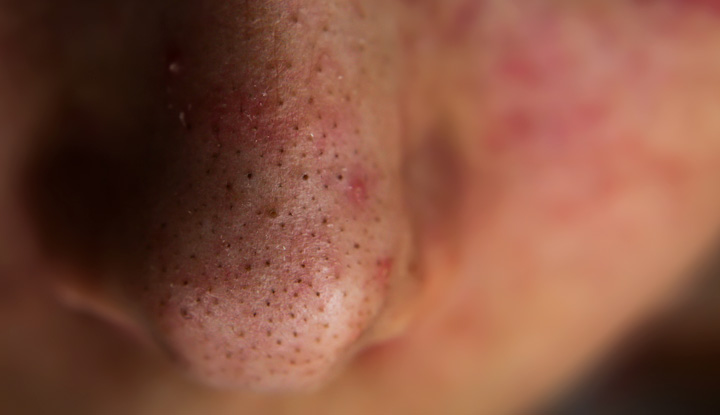
What are blackheads?
Blackheads are a blazon of acne (acne vulgaris). They're open bumps on the skin that fill with backlog oil and dead pare. They await as if dirt is in the bump, only an irregular lite reflection off the clogged follicle really causes the dark spots.
Blackheads aren't pimples. Pimples are minor, painful, discolored bumps with a thick, white-yellow fluid (pus) at the tip.
Who do blackheads affect?
Blackheads typically affect teenagers and young adults undergoing hormonal changes. However, many adults keep to have acne into their 20s, 30s and across. Some fifty-fifty develop blackheads for the first time as adults.
How common is this condition?
Blackheads are very common. Some researchers advise that blackheads impact about everyone during their lives. They're virtually mutual among adolescents, simply upwards to 10% to 20% of adults accept blackheads also.
How practice blackheads touch on my body?
Your face (especially your olfactory organ and chin, sometimes your cheeks), neck, dorsum and chest are most likely to develop blackheads. However, oil (sebaceous) glands are all over your body. They release an oily lubricant chosen sebum that helps proceed your pare and hair hydrated and shiny. Every bit a event, though it isn't common, blackheads sometimes announced on your barrel, thighs, ears and armpits.
Blackheads don't seriously bear upon your physical health, but they can affect you psychosocially (how gild and social groups affect your mind) and psychologically (your self-perception and behavior). Blackheads can cause feet, depression, mood disorders and suicidal thoughts.
Symptoms and Causes
What are the symptoms of blackheads?
Blackheads are a milder course of acne. Dark, open bumps in your peel are the chief characteristic of blackheads. They don't hurt or feel uncomfortable similar whiteheads.
What causes blackheads?
Sebaceous glands are located all over your body, and nigh of them connect to pilus follicles. Blackheads and whiteheads are comedones (singular comedo). Blackheads are open up comedones, and whiteheads are airtight comedones. Comedones occur when a pilus follicle/sebaceous gland becomes inflamed. Inflammation can occur as a event of:
- Increased sebum (oily material produced by the sebaceous gland) production.
- Abnormal formation of keratin (the protein that helps make your hair, skin and nails).
- Increased hormones (androgen).
- An increased presence of bacteria on pare that causes acne.
Are blackheads contagious?
Blackheads aren't contagious. Yous tin can't spread blackheads to some other person through skin-to-skin contact.
Diagnosis and Tests
How are blackheads diagnosed?
Blackheads are like shooting fish in a barrel to recognize, so y'all don't necessarily need a healthcare professional to diagnose them. If you have blackheads along with other severe forms of acne, see a dermatologist for treatment. Dermatologists are doctors who specialize in atmospheric condition that affect your skin, hair and nails.
Management and Treatment
How are blackheads treated?
Nonprescription medications tin can treat blackheads. These may include:
- Salicylic acid: This is available over-the-counter for blackheads every bit a cleanser or lotion. It helps remove the top layer of damaged skin. Salicylic acid dissolves expressionless peel cells to prevent your hair follicles from bottleneck.
- Azelaic acrid: Barley, wheat, rye and other various grains naturally comprise azelaic acrid. It kills microorganisms on your peel and reduces swelling.
- Benzoyl peroxide: This is available equally an over-the-counter product (such as Clearasil®, Stridex® and PanOxyl®) as a leave-on gel or wash. It targets surface bacteria, which often aggravates acne. Lower concentrations and wash formulations are less irritating to your peel. Irritation (dryness) is a mutual side event.
- Retinoids (vitamin A derivatives): Retinoids, such every bit Retin-A®, Tazorac® and Differin® (which is now available without a prescription), break up blackheads and whiteheads and help to prevent clogged pores. You may notice a change in skin color or peeling. Using retinoids every other day or using them at the same fourth dimension every bit a moisturizer tin can reduce these side effects.
If your blackheads don't become away with nonprescription medications, your healthcare provider may recommend:
- Prescription-strength retinoids: Prescription-strength retinoids are stronger than nonprescription retinoids.
- Oral antibiotics: Oral antibiotics reduce the bacteria that cause blackheads.
- Microdermabrasion: A dermatologist uses a specialized instrument to "sand" your peel. Removing the top layers of your peel frees the clogs that cause blackheads.
- Chemical peels: Chemic peels use a mild chemic solution to remove layers of pare and reduce blackheads.
- Laser peel resurfacing: Laser pare resurfacing directs short, concentrated pulsating beams of light at your blackheads. The light beams reduce the amount of oil that your sebaceous glands produce.
Are in that location whatever home remedies for blackheads?
There are a few home remedies that may help care for blackheads:
- Tea tree oil: Tea tree oil can prevent or stop the growth of leaner. Utilize a pocket-size amount of tea tree oil to a cotton wool applicator and rub information technology on your blackheads.
- Sugar or salt scrubs: Saccharide and salt scrubs scratch away (exfoliate) dead cells on the surface of your peel. Moisture your face, utilize a salt or carbohydrate scrub to your affected areas and massage your skin in small, circular motions for up to 30 seconds. Rinse your face with h2o when you're finished.
- Green tea: Moisture greenish tea leaves can help reduce oil production in your skin. Green tea is besides an antioxidant. Mix dry out dark-green tea leaves with water and massage the wet leaves into your peel in small-scale, round motions for up to thirty seconds. Rinse your confront with water when y'all're finished.
Do blackheads become away on their own?
Blackheads can sometimes get away on their own — it depends on how deep blackheads are in your skin. If a blackhead is close to the surface of your skin, information technology's more likely to go away on its own. However, some blackheads can be securely embedded in your skin. Deep, embedded blackheads are less probable to go away on their ain. If you have embedded blackheads, a dermatologist or medical aesthetician can remove them.
Is information technology okay to clasp out blackheads?
Information technology tin exist very tempting — and satisfying — to squeeze out or pop blackheads. Nonetheless, squeezing out blackheads can create several problems:
- You lot may not remove the unabridged blackhead. You may even push the blackhead further into your skin, which tin can crusade painful irritation.
- You may innovate bacteria or more oil into the blackhead opening. Your blackheads could get bigger or fifty-fifty spread.
- Inflammation or scarring. Your skin is sensitive, and your nails are much stronger than your skin. When you use your nails to utilise a lot of pressure level to your skin to remove a blackhead, you can irritate or seriously damage your pare.
How do you get rid of deep blackheads?
Deep blackheads should exist removed by a medical professional — usually a dermatologist or medical aesthetician. They apply a small-scale tool with rigid metallic loops on the ends (blackhead or comedo extractor) to use even pressure to your blackheads. They can safely remove the entire blackhead and reduce the risk of it returning.
Prevention
How practice yous prevent blackheads?
Preventing blackheads is hard, if not impossible, during normal hormonal changes. But some things can help:
- Launder your face daily with warm water and a mild facial cleanser.
- Routinely use moisturizer.
- You don't accept to stop using makeup, but try to employ "noncomedogenic" products and remove makeup at the end of each day.
- Keep your hands away from your face.
Outlook / Prognosis
What can I expect if I have blackheads?
Blackheads ofttimes go away in early on adulthood, though some people volition continue to experience them throughout their lives. Your healthcare provider, medical aesthetician or dermatologist tin can aid you manage your blackheads.
Living With
When should I see my healthcare provider about my blackheads?
See your healthcare provider as soon as you detect blackheads to start treatment immediately.
What questions should I enquire my healthcare provider?
- How severe are my blackheads?
- Do I need to see a medical aesthetician or dermatologist?
- What over-the-counter medications practice you recommend?
- Do I demand more serious treatment?
A annotation from Cleveland Dispensary
Blackheads are a common skin condition that affects the majority of people, especially adolescents. Because it mainly affects adolescents, many people attribute blackheads as role of the transition from babyhood to adulthood and don't see a healthcare provider about them. Nevertheless, despite how common they are, they can have a severe effect on your mental wellness. If you discover symptoms of feet or depression due to the presence of blackheads, talk to your healthcare provider.

Source: https://my.clevelandclinic.org/health/diseases/22038-blackheads
Posted by: rodriguezfitte1962.blogspot.com
0 Response to "How To Draw Out A Deep Blackhead On Cheek"
Post a Comment